
005 ADAM WASHELL
on community, authenticity, and what still matters in skateboarding
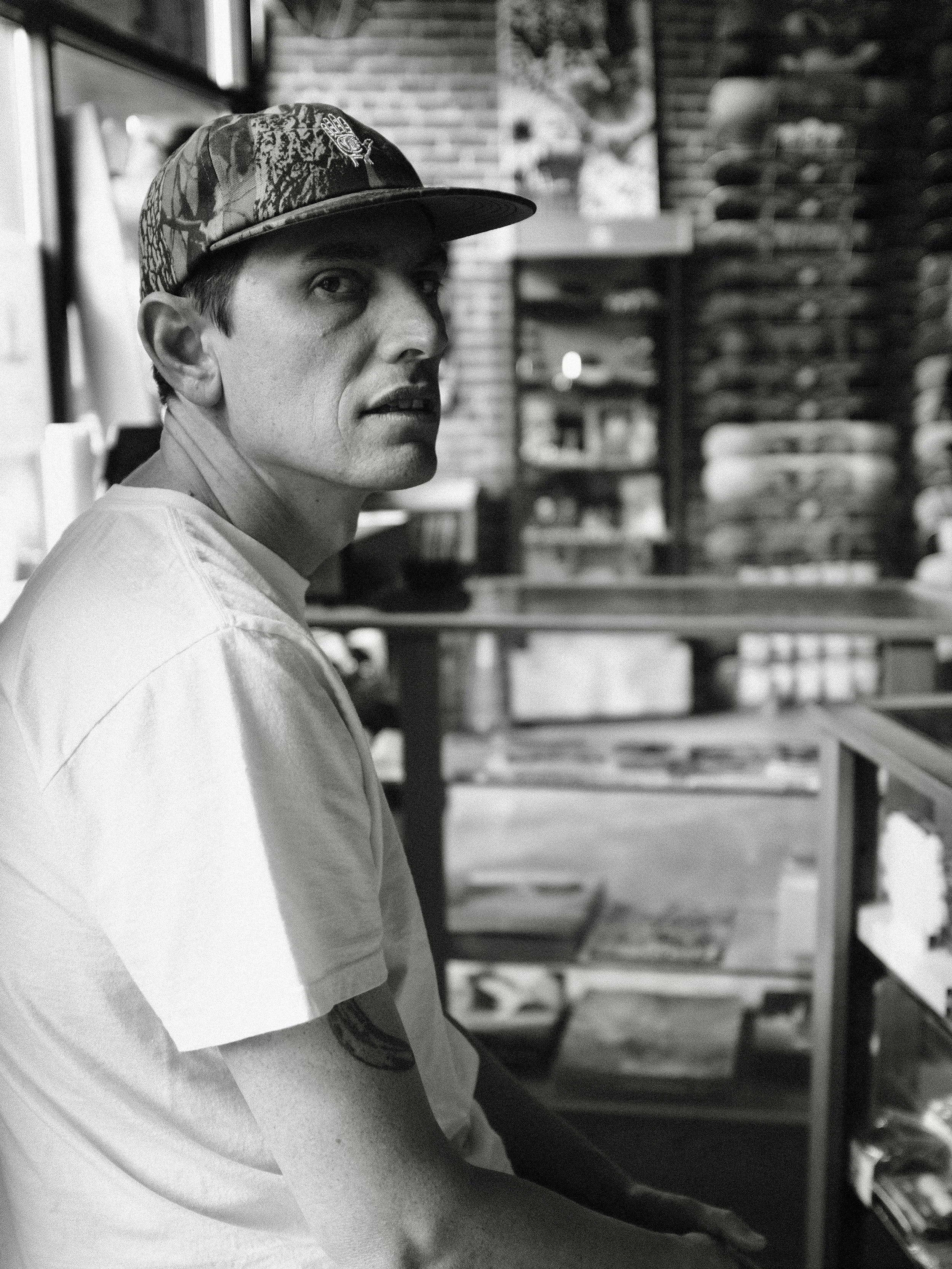
PHOTO: COOPER
Skateboarding is one of those things that doesn’t really make sense from the outside. There’s no clear path, no real rules, and no obvious reason why people stick with it for as long as they do.
But the people who stay usually aren’t there for the same reason they started.
For Adam Washell, skateboarding has always been there.
He grew up around his older brothers and their friends, with a driveway that functioned more like a skatepark than a front yard. It wasn’t something he chased—it was just part of his environment. Something he fell into.
Even then, it wasn’t necessarily the thing he loved most. Surfing had more of his attention early on, but skating was what was available. Central Florida made that decision for him.
What kept him around wasn’t just the act itself. It was everything that came with it, the friends, travel, and the shared experiences that don’t exist outside of it. The people he grew up skating with are still around, still skating, and in some cases, still working alongside him.
“Most kids just want to be a part of something.”
Like a lot of people, the shop became the center of everything.
Adam started working at one when he was fourteen, and what could have been a part-time job turned into something that shaped how he saw the world. It was a hub for a small group of kids looking for something beyond where they were from, and spending nearly a decade inside that environment left a mark.
That idea hasn’t really changed for him.
Now, the focus is on creating that same kind of space, something open, welcoming, and consistent. A place where kids can come in, feel comfortable, and figure things out at their own pace.
Most of them aren’t just there to buy something. They’re looking for a sense of belonging.
As Adam puts it, “most kids just want to be a part of something.”
And you can usually tell who’s going to stick with it. The ones paying attention. The ones asking questions. The ones who care about what’s happening beyond just what’s in front of them.
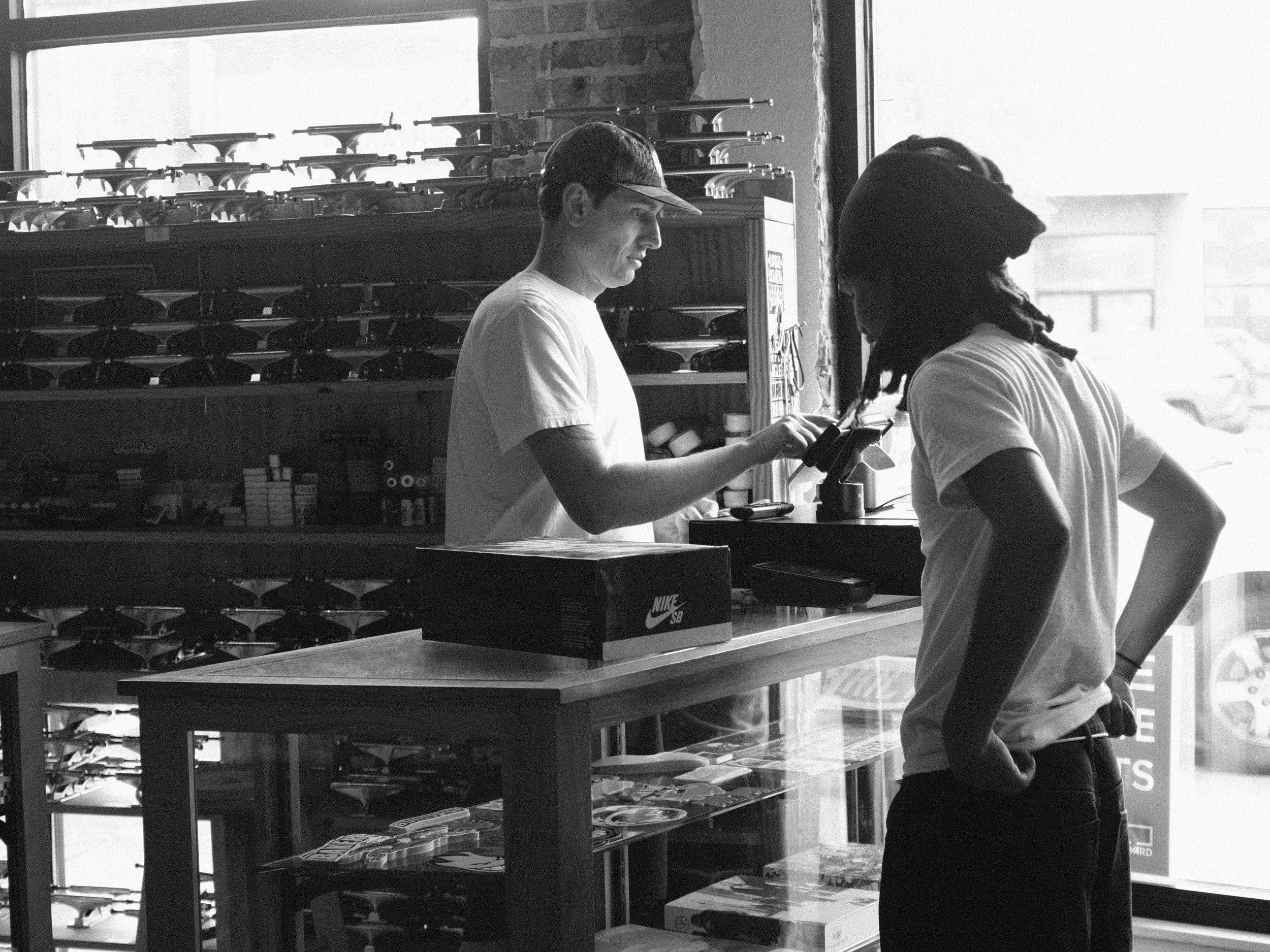
PHOTO: COOPER
As he got older, skateboarding shifted from something he was part of to something he worked inside of.
Early exposure to tradeshows gave him a glimpse into what existed beyond trying to go pro. There were other paths—buying, managing, organizing, building something behind the scenes.
That eventually led to working at Skatepark of Tampa, where the perspective shifted again.
That’s where skateboarding started to look like an actual industry.
Brands, reps, shops, and skaters all tied together through something much bigger than what it appears to be on the surface. There’s real money involved. Real structure. Real expectations.
And once you see that side of it, it’s hard to ignore.
Strip away the image, and it starts to look like any other business—something Adam describes as “cut throat bureaucracy propped up by people with too much money,” many of whom have little connection to skateboarding itself.
PHOTO: COOPER
That tension shows up most clearly in brands.
A lot of what exists now feels recycled. Familiar ideas, reworked and pushed back out.
But when something actually feels original, it stands out immediately.
He points to WKND Skateboards as an example. The projects that feel intentional, weird in the right way, and not afraid to lean into their own identity. Not everything needs to land for everyone, but it feels like it comes from somewhere real.
At the same time, what people connect to isn’t always logical. It’s personal.
A single clip can define everything. A skater, a brand, a shoe, whatever it is, it sticks. And once that connection is there, it’s hard to break.
“That’s the beauty and horror of it all,” he says. “Personal preference.”
And then there’s everything that just misses completely.
Too many collaborations. Too much licensing. Things that technically make sense, but don’t belong.
PHOTO: COOPER
A lot of that disconnect ties back to what’s changed over time.
For Adam, the late 90s and early 2000s felt different. Not necessarily better across the board, but more alive.
Events felt raw. Less controlled. More chaotic in a way that made them feel real.
He describes it as electric. There were brands everywhere, photographers documenting everything, a sense that something was actually happening instead of being presented.
Now, things feel more structured. More polished. More controlled.
At one point, he puts it simply:
“the soul was severed from the body.”
At the same time, he understands what came with that shift. Stability. Opportunities. A version of skateboarding that allows people to build a life from it in ways that weren’t always possible before.
That tension, between growth and authenticity, doesn’t really resolve.
Social media only adds to it.
It’s made skateboarding more visible than ever. Easier to access. Easier to discover new talent.
But it’s also made everything faster. More disposable. Harder to build long-term connection to anything.
It’s harder to create loyalty when everything is constantly in front of you.
And some things just don’t translate.
“We can’t substitute the full length skate video for an Instagram edit,” he says. “Doesn’t have the same effect.”
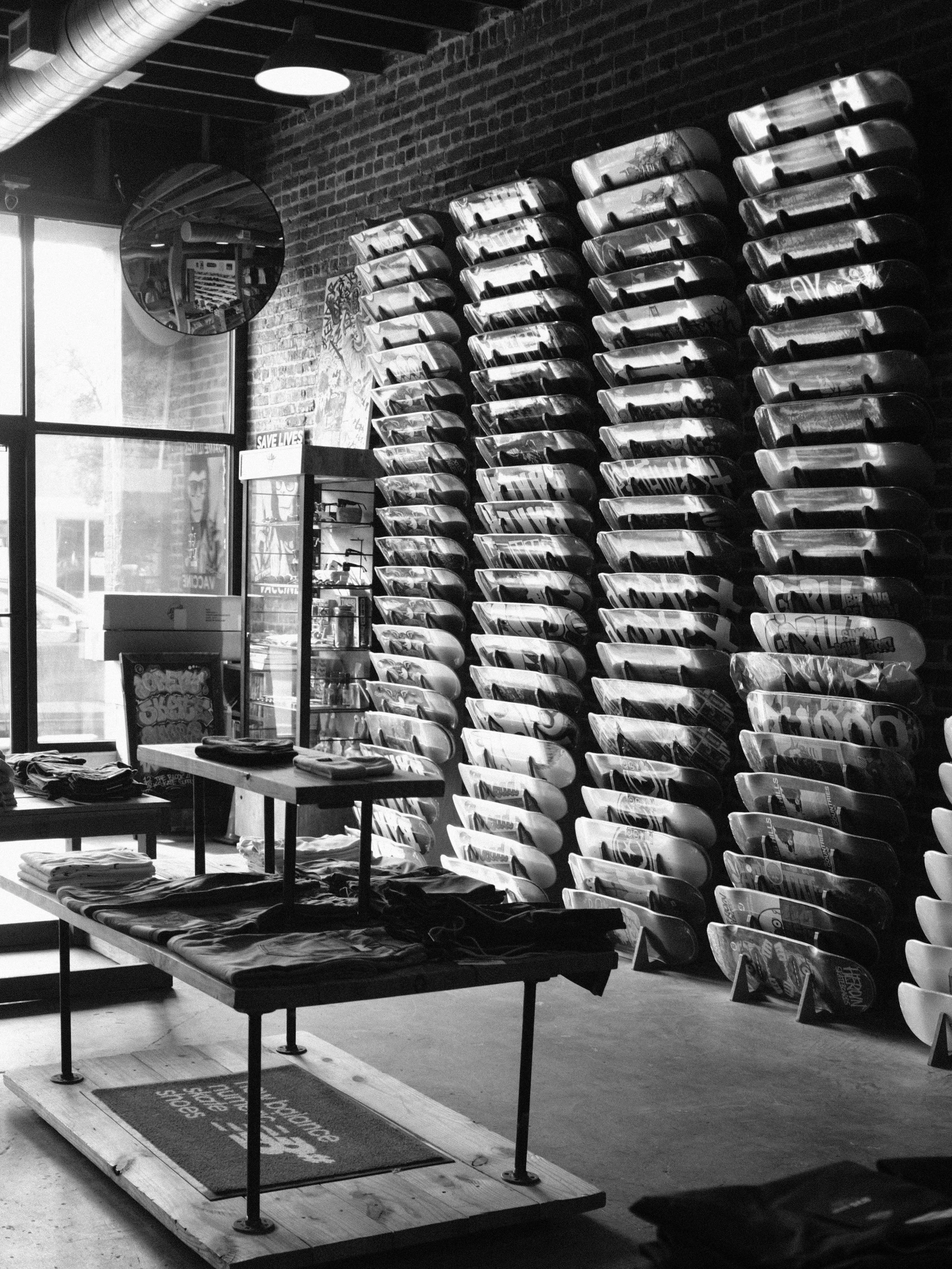
PHOTO: COOPER
Even with all of that, not everything is moving in the wrong direction.
Skateboarding feels more open now. More inclusive. More willing to accept different people and different ways of participating.
That part matters.
But if there’s one thing he would change, it comes down to leadership.
Passing things down. Letting new people shape what comes next. Not holding onto something just because it’s always been that way.
“If this industry wants to thrive again,” he says,
“we need to start passing the torch.”
After everything, the shops, brands, the industry, all of it—the reason he’s still here is simple.
“My friends.”
ADAM’S TOP 5
“Because they all had some sort of impact on my life and career in skateboarding, I’ll give you my top 5 people I owe a shoutout to. Otherwise I’ll nerd out and give you a few more paragraphs of nonsense. So special shoutout to Patrick Stiener, Will Campbell, Frank Branca, Schaler & Kirstan Perry. These 5 individuals have always been in my corner, and I wouldn’t be where I’m at today without them.”
ADAM’S CHRISTMAS COMPLETE
“Simon Woodstock EVOL complete from CCS. My Christmas list specifically had something different on it, but Moms took the matter into her own hands. I was bummed, but I put it to good use anyways, and I’m pretty sure I traded it for a Hook-Ups at some point.”
LAST WORDS
“The phrase “PRO AS FUCK” is so corny. Can we please move past it?”